
Start System Validation


Select Your Lifting System Type
-

Gantry Cranes
Portable lifting systems designed for mobile or temporary operations where fixed infrastructure is not available.
-

Jib Cranes
Fixed-position lifting systems used for repetitive, localized material handling around workstations or machines.
-

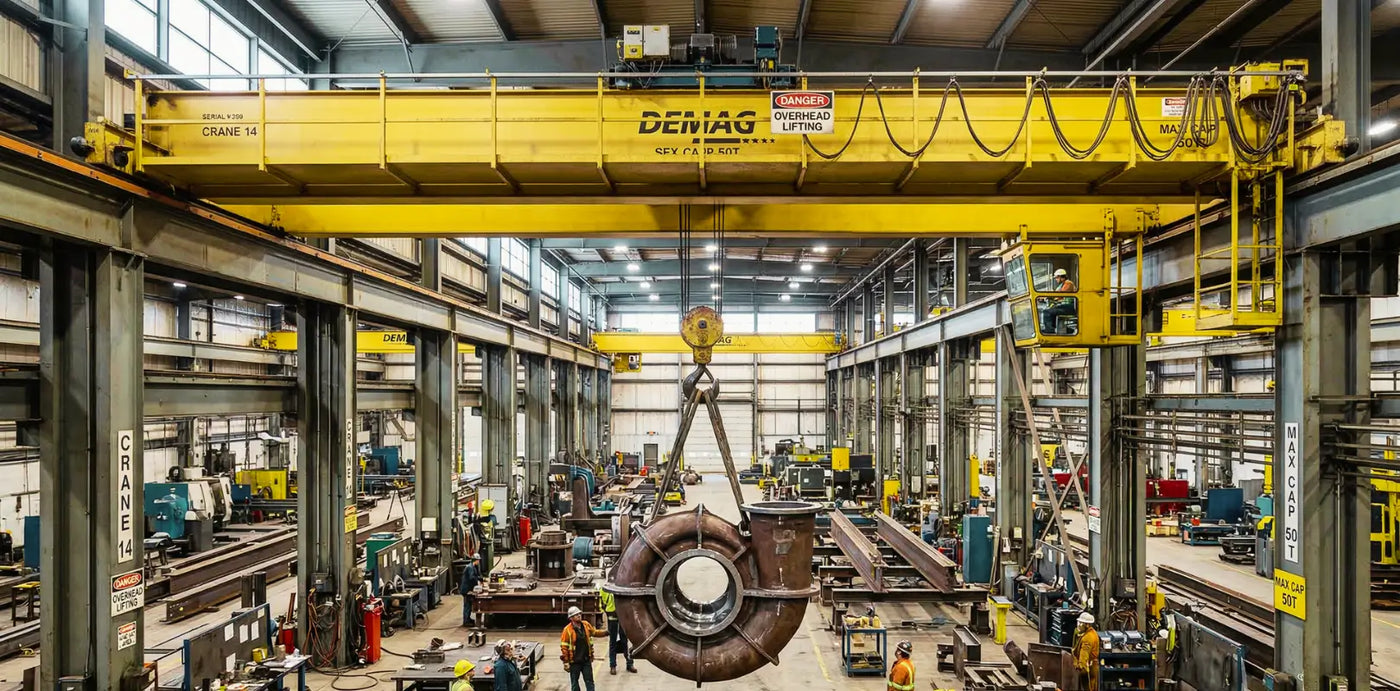
Overhead Crane Systems
Full-coverage lifting systems that move loads across facility spans using runway-mounted bridge structures.
-

Workstation Cranes
Light-duty overhead systems engineered for ergonomic handling in assembly, packaging, and precision workflows.


System Misfit & Risk Filters
-
Do NOT use a gantry crane if:
- Floor load rating is unknown
- Movement path is restricted
- Load exceeds X threshold
-
Do NOT use a jib crane if:
- Mounting surface cannot handle moment load
- Rotation clearance is obstructed
Application-Based System Matching


EQUIPMENT APPLICATIONS
System Applications by Operational Use Case
Evaluate lifting system fit based on workflow constraints, load handling requirements, and facility conditions. These use cases define where systems apply—and where they do not—before RFQ submission.

ASSEMBLY WORKSTATIONS
Repetitive Workstation Lifting Systems
Fixed-position handling example
Used for controlled, repetitive lifting over defined work areas where precision and operator coverage are required. Not suitable for long-travel material movement or variable load paths.

WAREHOUSE HANDLING
Material Movement and Staging Systems
Short-path transfer example
Designed for predictable load transfer between staging, packing, and storage zones. Not intended for full-facility crane coverage or heavy structural lifting requirements.

MAINTENANCE OPERATIONS
Service and Equipment Maintenance Lifting
Variable access example
Supports intermittent lifting for servicing and equipment access where positioning flexibility is required. Mounting conditions and structural support must be verified before system selection.
Frequently Asked Questions About Industrial Lifting System Selection
What information do you need before quoting a lifting system?
What information do you need before quoting a lifting system?
At minimum, we need the required load capacity, span or reach, and mounting or installation condition. If those inputs are missing, we can still review the request, but final system selection cannot be confirmed until facility constraints are validated.
How do I know whether I need a gantry crane, jib crane, or overhead system?
How do I know whether I need a gantry crane, jib crane, or overhead system?
Gantry cranes are typically used when floor-supported or mobile lifting is required. Jib cranes are used for localized workstation coverage. Overhead systems are used when loads must move across a defined bay or facility path. The correct system depends on load path, structural support, coverage area, and whether the system is fixed or mobile.
Can you recommend a system if I don’t have all the specifications yet?
Can you recommend a system if I don’t have all the specifications yet?
Yes, preliminary recommendations can be made using approximate values. Our team will follow up to confirm missing details. If structural support, span, or application conditions are unclear, the request will be routed for validation before confirming system compatibility.
Are these systems suitable for outdoor or uneven-terrain use?
Are these systems suitable for outdoor or uneven-terrain use?
Not always. Outdoor environments, wind exposure, uneven terrain, or unstable surfaces can disqualify standard systems or require engineering review. Suitability depends on clearly defined environmental and installation conditions.
Do you sell lifting systems directly online?
Do you sell lifting systems directly online?
No. These systems are quote-based, not standard add-to-cart products. Each system must be matched to capacity, span, mounting type, and compliance requirements before supply.
What happens after I submit a quote request?
What happens after I submit a quote request?
Your request is reviewed based on load requirements, geometry, and installation constraints. If the scope is clear, we proceed with a supplier-backed quote path. If details are incomplete or unclear, our team will contact you for clarification before proceeding.